Jim O’Connor Calls for Immediate Action to Deploy Opioid Settlement Capital
Second Story Foundation leader urges state officials to fix stalled capital funding and strengthen long-term recovery infrastructure
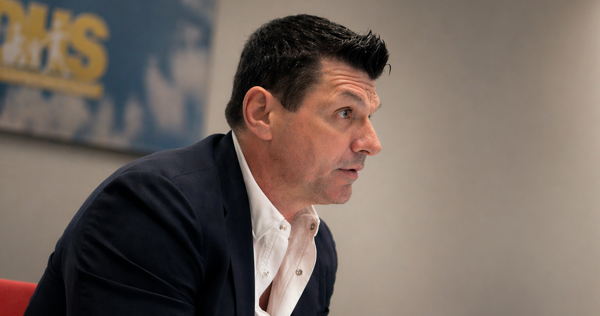
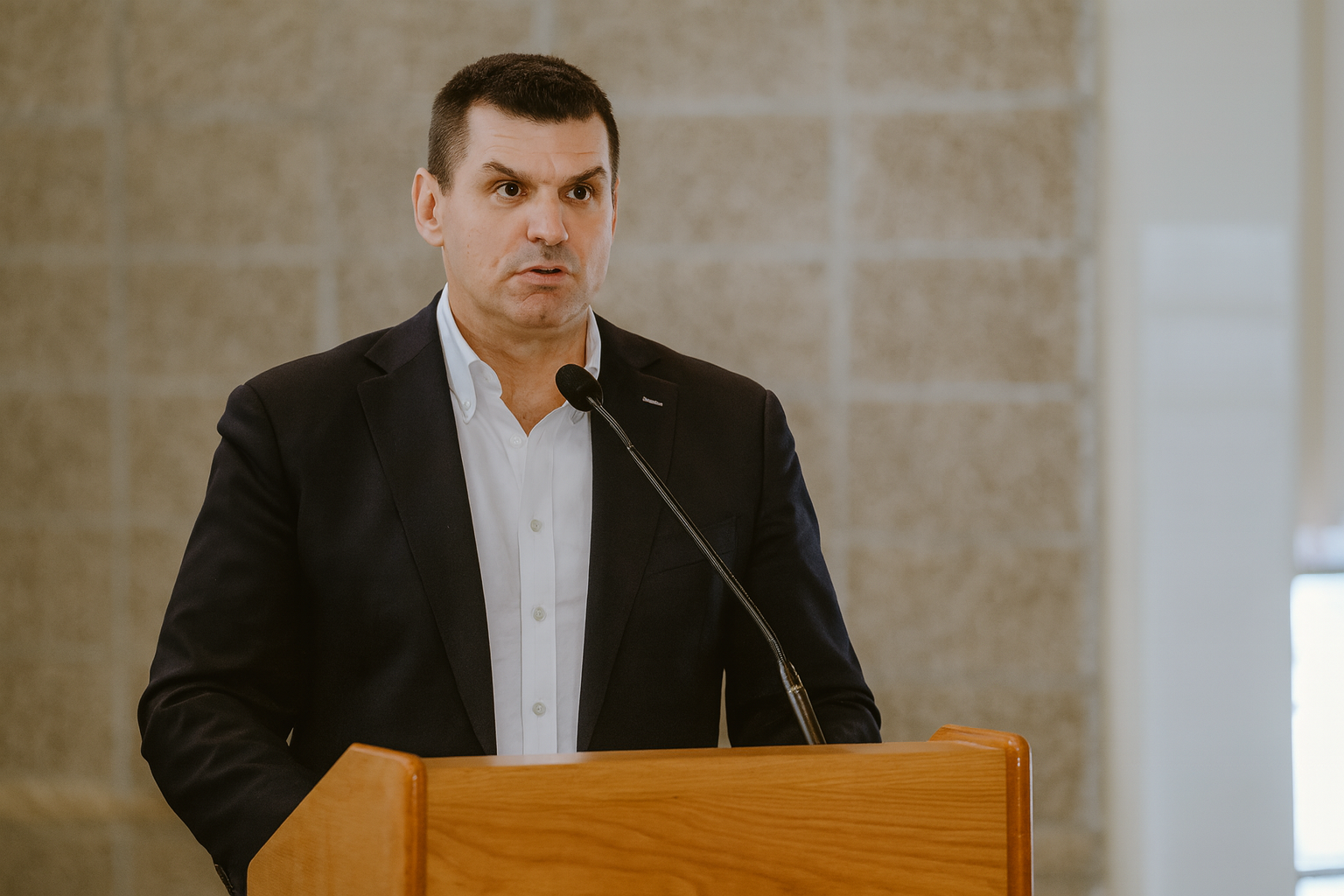
Jim O’Connor, CADC, executive director of the Second Story Foundation, delivered testimony to the Governor’s Opioid Overdose Prevention and Recovery Steering Committee on November 20, 2025, outlining the urgent need to release already approved Opioid Settlement capital funds.
Drawing on his background in public policy and community health, and a decade of direct work with men facing severe substance use disorder and housing instability, O’Connor described how delayed capital deployment is limiting bed capacity, slowing progress on shovel-ready recovery projects, and weakening a statewide continuum of care at a time when demand for long-term support is rising.
TESTIMONY OF Jim O’Connor, CADC
Executive Director, Second Story Foundation
Governor’s Opioid Overdose Prevention and Recovery Steering Committee Meeting
November 20, 2025 at 10 a.m.
Chicago, IL
My name is Jim O’Connor. I am a Certified Alcohol and Drug Counselor and the Executive Director of Second Story Foundation.
My background includes public policy, community health, and direct care. Early in my career, I worked in national advocacy with the Fund for Public Interest. I partnered with the Human Rights Campaign to support the inclusion of gay and lesbian people in the Matthew Shepard and James Byrd Jr. Hate Crimes Prevention Act. I later served with the Peace Corps in Benin, West Africa, on rural health initiatives. I also worked at Hephzibah Children’s Association’s long-term residential group home in Oak Park, where I cared for children who had survived severe abuse and trauma.
I also have lived experience with severe substance use disorder, unemployment, homelessness, and a suicide attempt, exactly in that order. I completed detox, inpatient treatment, and long-term residential recovery. I’ve been in continuous sober recovery for more than nine and a half years, hold an addiction studies degree, and have spent the last decade working with men facing severe SUD combined with housing instability and chronic underemployment.
Since 2019, I have worked in residential recovery settings that help men stabilize, secure work, and reintegrate into the community. I co-founded Second Story Foundation to support people who have completed treatment but continue to face systemic barriers, including limited recovery housing, tight housing markets, gaps in workforce development, and lack of transportation. We pair these supports with peer recovery, mutual aid, case management, and counseling.
For thousands of people in Illinois, long-term stability requires treatment followed by recovery housing. Many ASAM 3.5 and 3.1 providers have opened their own recovery homes because the statewide gap is so large. The need is clear and immediate.
The problem is straightforward. Opioid Settlement capital dollars, already approved for recovery infrastructure, have gone unused for nearly two years. Shovel-ready projects that can expand bed capacity, improve outcomes, and strengthen the continuum of care have been unable to access these funds or receive clear guidance about when or how they can. Construction costs continue to rise, which increases the total cost of every delayed project.
In the last two months, I have met with seven Illinois Senators and two Representatives. Every one of them asked why Opioid Settlement capital funds were not being deployed before turning to the state budget for projects that clearly meet approved abatement uses. The answer from IDHS is that the department has no mechanism to administer capital and no plan to create one.
There is a workable mechanism on the table. A partner-led model using Illinois Community Development Financial Institutions can move capital quickly. These CDFIs already have experience administering public capital, managing procurement, and meeting all GATA and state compliance requirements. In this model, the CDFI partners with the project owner to apply for capital funds. The CDFI manages drawdowns, oversight, procurement, compliance, and reporting. Administrative costs are covered through a discrete service contract with the project owner rather than through a third-party state contract, and the total cost is roughly half the typical allowable indirect rate. This model is specific, measurable, achievable, and reasonable. It can be stood up within sixty to ninety days with the political will.
The policy landscape makes inaction especially risky. We are seeing Medicaid cuts, increased administrative burdens to recertify, and new work or volunteer requirements. We are seeing SNAP cuts paired with expanded work requirements. We are seeing HUD reduce support for permanent supportive housing and Housing First while elevating transitional housing models that require forty hours per week of program participation. We are seeing SAMHSA shift toward recovery homes, recovery community organizations, peer support, and long-term recovery outcomes. These changes are not isolated. They reflect a broad national pivot in how governments expect recovery, housing, and workforce stabilization to function.
Macro-level forces are also increasing. Market volatility and bubble indicators, AI-driven workforce disruption, private-equity debt exposure, political division and polarization, an unsustainable national deficit, and a widening gap between asset holders and wage earners are aligning in ways that will sharply increase pressure on the substance use, housing, workforce, and behavioral-health systems in the coming years.
We need to build resilient recovery infrastructure now, not later, not after another crisis, not after another task force, and not after we lose more people to preventable gaps in the system. You have capital dollars approved for this purpose. You have a feasible administrative path. You have shovel-ready projects. And you have a growing statewide gap that requires immediate action. In the farm-based recovery program I directed, we had a saying for work and for service: “Boots on, let’s go.”
The IORAB approved Opioid Settlement Funds for capital on July 13, 2023, and the Steering Committee accepted that in September of 2023. Deploying these funds is not more difficult than achieving long-term recovery. It should not take as long.
Boots on, let’s go. Thank you for your time.